NVIDIA Blackwell B200 vs Custom Cloud ASICs: Enterprise AI Inference Benchmarks for 2026
Comparing NVIDIA Blackwell B200 architectures against custom cloud ASICs (Google TPU v6, AWS Trainium/Inferentia). Discover FP4 quantization benchmarks, token economics, and energy costs.
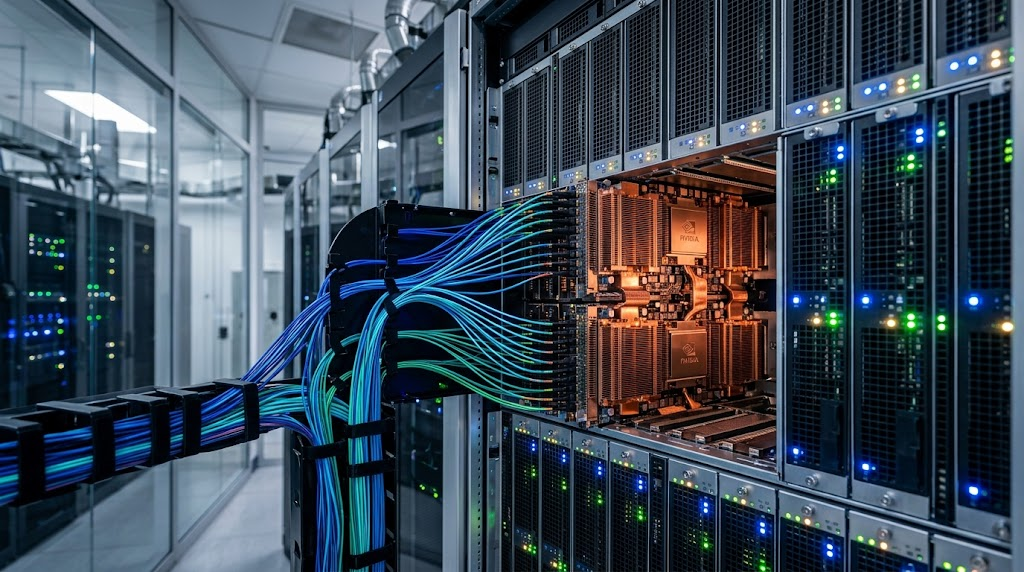
As enterprise generative AI deployments transition from initial model training to high-throughput production inference, the compute architecture equation has fundamentally shifted. Infrastructure architects in late 2026 face an escalating dilemma: deploy general-purpose flagship GPUs like the NVIDIA Blackwell B200 or standardize on custom application-specific integrated circuits (ASICs) developed by major cloud hyperscalers.
While NVIDIA continues to dominate peak compute density and developer software ecosystems, custom silicon like Google's Trillium (TPU v6e) and AWS Inferentia clusters are aggressively competing on total cost of ownership (TCO), memory latency, and energy efficiency per token.
Architecture Comparison: Raw Throughput vs. Tailored Silicon
The operational divide between NVIDIA's unified GPU architecture and custom hyperscaler ASICs lies in architectural flexibility versus specialized silicon efficiency:
| Hardware Metric | NVIDIA Blackwell B200 | Custom Cloud ASICs (TPU v6e / Inferentia) |
|---|---|---|
| Primary Precision Support | Native FP4, FP8, FP16, BF16 | Primarily INT8, BF16, custom formats |
| High-Bandwidth Memory (HBM) | 192GB HBM3e (8 TB/s bandwidth) | 32GB – 96GB HBM / High-speed DDR pools |
| Interconnect Speed | NVLink 5 (1.8 TB/s bidirectional) | Custom optical interconnect / PCIe switching |
| Thermal Design Power (TDP) | 1,000W – 1,200W per dual-die module | 250W – 450W per accelerator chip |
| Software Portability | Universal CUDA, TensorRT-LLM, Triton | Provider-locked SDKs (Neuron, JAX/XLA) |
The FP4 Advantage: Slashing Real-Time Inference Overhead
The single most impactful architectural advancement in the Blackwell architecture is its second-generation Transformer Engine featuring native 4-bit floating point (FP4) quantization. In high-concurrency production models with hundreds of billions of parameters, model weight loading is constrained by memory bandwidth rather than arithmetic compute alone.
By quantizing weights and activation tensors down to FP4 precision without sacrificing perplexity, the B200 delivers roughly 2.5x to 4x throughput gains compared to prior Hopper generation infrastructure running FP8. This allows enterprises to serve multi-agent autonomous systems and real-time audio models with sub-50ms time-to-first-token (TTFT) metrics.
Token Economics: When Custom ASICs Win on Cost
While the Blackwell platform dominates benchmark leaderboards, custom hyperscaler chips offer compelling operational economics for fixed, long-running production workloads:
- Power Density & Rack Utilization: With data centers facing severe power allocation caps in 2026, operating 1,000W Blackwell modules requires complex liquid-cooling distribution units (CDUs). Lower-power ASICs can be deployed directly into air-cooled racks without expensive retrofits.
- Dedicated Model Serving: If an engineering team runs a single open-weights model architecture (e.g., Llama 3 derivative or Mistral fine-tune) continuously for months, compiling the computation graph down to custom ASIC silicon eliminates the hardware premium paid for CUDA programmability.
- Cloud Provider Margin Cuts: Cloud hyperscalers price their internal silicon aggressively, often delivering a 30% to 50% discount on cost per million tokens compared to equivalent on-demand NVIDIA GPU clusters.
Infrastructure Decision Framework
For engineering leads structuring their compute budgets for the remainder of 2026:
- Choose NVIDIA Blackwell: If your product relies on rapidly iterating model architectures, bleeding-edge mixture-of-experts (MoE) structures, multi-cloud redundancy, or low-latency FP4 precision requirements.
- Choose Cloud ASICs: If your inference workloads are static, standardized on established frameworks, and your primary operational constraint is energy consumption or monthly cloud spend.
Related Engineering & Infrastructure Guides
- → WebAssembly (Wasm) vs Docker Microservices: Low-Latency Performance Benchmarks for 2026
- → Why Edge AI Is Replacing the Cloud for Real-Time Enterprise Computing
- → Google Privacy Sandbox vs Third-Party Cookies: What the Q2 2026 Tracking Shift Means for Publishers
- → Explore Full TrendSpike Engineering Archive →
Read Next: WebAssembly (Wasm) vs Docker Microservices: Low-Latency Performance Benchmarks for 2026 →
TrendSpike Editorial Team
Staff Research & Technical AnalysisIndependent research covering distributed cloud systems, modern enterprise software engineering, and macro-financial policy. Our technical and financial analyses reference primary documentation, official regulatory filings, and benchmark architectures.