WebAssembly (Wasm) vs Docker Microservices: Low-Latency Performance Benchmarks for 2026
Comparing WebAssembly (Wasm) runtimes against lightweight Docker containers in 2026. Explore cold-start millisecond benchmarks, memory footprints, and edge deployments.
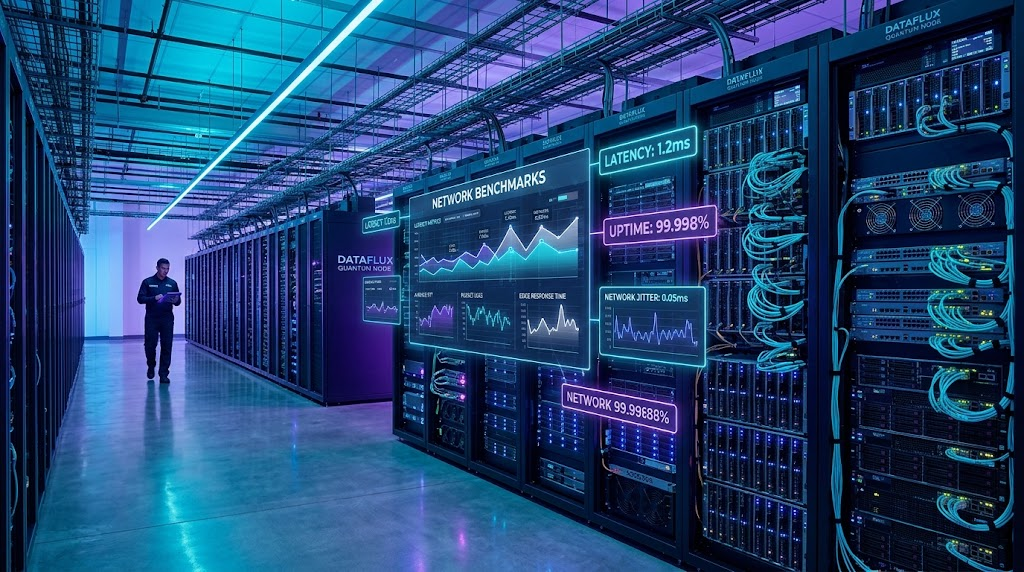
As distributed systems demand sub-millisecond execution for financial order routing, real-time telemetry, and edge-native workloads, the traditional container model is facing structural scrutiny. While Docker revolutionized application isolation, runtime engineers in 2026 are increasingly deploying WebAssembly (Wasm) runtimes to shave off critical operational latency.
Choosing between WebAssembly System Interface (WASI) modules and minimal Open Container Initiative (OCI) containers is not an aesthetic choice—it dictates your infrastructure compute footprint, startup latency, and memory saturation under high-concurrency loads.
Architecture Breakdown: Container Virtualization vs. Bytecode Sandboxing
The performance delta between Docker and Wasm stems from how each system handles execution boundaries and host operating system interaction:
| Operational Metric | Docker (Alpine / Distroless OCI) | WebAssembly (Wasmtime / WasmEdge) |
|---|---|---|
| Cold-Start Boot Time | 150ms – 450ms | < 1ms – 5ms |
| Binary Payload Footprint | 15MB – 150MB+ (includes Linux userland) | < 2MB (pure compiled bytecode) |
| Memory Baseline Per Instance | 30MB – 64MB baseline idle | < 1MB linear memory |
| Isolation Mechanism | Linux namespaces, cgroups, seccomp | Capability-based security & memory sandbox |
| OS Dependency | Tied to host OS kernel primitives | Truly portable across OS and CPU architectures |
Why Cold-Start Latency Matters in 2026 Microservices
In auto-scaling architectures, container boot latency creates the notorious "cold-start spike." When traffic bursts hit standard Kubernetes clusters, provisioning a new container pod requires mounting namespaces, running initialization scripts, and starting the runtime environment.
WebAssembly modules eliminate this overhead entirely. Because Wasm runs as compiled bytecode directly within a host process runtime (such as Wasmtime or Spin), initializing a worker instance behaves like calling a local function. For serverless functions and event-driven pipelines, Wasm delivers instant scale-to-zero capabilities without leaving idle resources burning cloud credits.
Current Limitations: When You Still Need Docker
Despite its performance advantages, WebAssembly is not a universal drop-in replacement for the container ecosystem:
- Legacy Codebases & Complex Dependencies: Applications relying heavily on complex C-bindings, raw socket manipulations, or un-ported system calls remain difficult to compile into WASI targets without substantial rewrites.
- Mature Tooling & Orchestration: Docker and Kubernetes offer ten years of operational hardening, CI/CD integrations, secret management, and network mesh ecosystems that the Wasm runtime ecosystem is still actively standardizing.
- Multithreading and GPU Acceleration: While Wasm thread proposals and WebGPU extensions continue to advance, production-scale AI model training and direct hardware acceleration remain significantly easier to manage inside standardized container runtimes.
Related Engineering & Infrastructure Guides
- → Google Privacy Sandbox vs Third-Party Cookies: What the Q2 2026 Tracking Shift Means for Publishers
- → Why Edge AI Is Replacing the Cloud for Real-Time Enterprise Computing
- → Google Messages Rolls Out Swipe for Timestamps and Redesigned Reply Gesture in Major UI Update
- → Explore Full TrendSpike Engineering Archive →
TrendSpike Editorial Team
Staff Research & Technical AnalysisIndependent research covering distributed cloud systems, modern enterprise software engineering, and macro-financial policy. Our technical and financial analyses reference primary documentation, official regulatory filings, and benchmark architectures.