Veronika Grimm Warns of European Gas Supply Illusion: German 'Wirtschaftsweise' Economist on Winter Energy Vulnerability and Fuel Rebates
Prominent German economic advisor Veronika Grimm has warned that Europe's natural gas security remains fragile. In a scathing critique of short-term state interventions, the 'Wirtschaftsweise' economist outlines the structural risks facing European industry heading into winter.
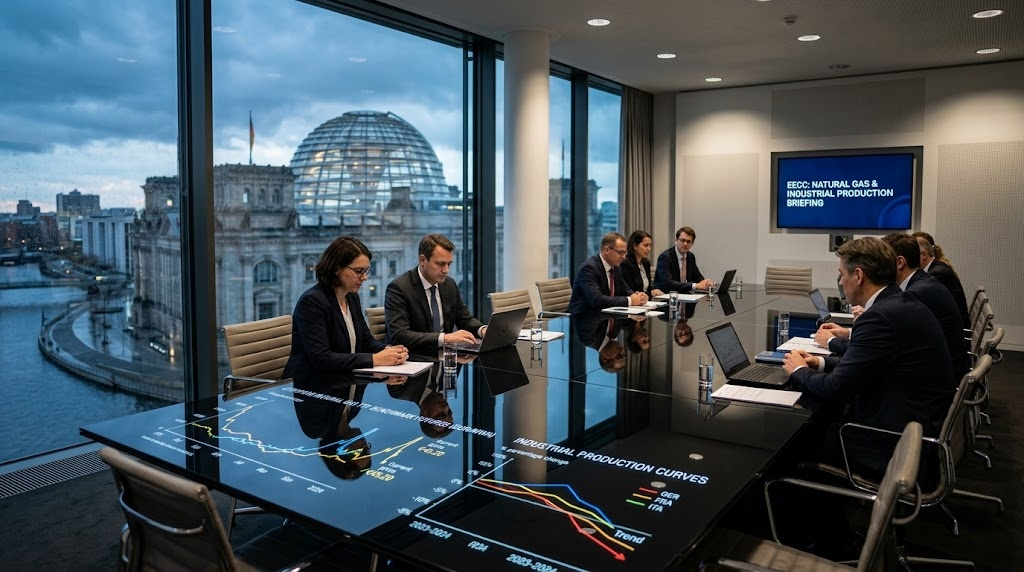
Europe’s apparent sense of security regarding winter energy reserves is built on a fragile foundation, according to prominent German economist and 'Wirtschaftsweise' council member Prof. Dr. Veronika Grimm. In a series of pointed economic assessments, Grimm warned that policymakers are repeating structural errors by mistaking temporary market lulls for permanent stability.
Grimm, one of the five appointed members of the German Council of Economic Experts, emphasized that while European storage facilities report high seasonal capacity numbers, industrial demand destruction and vulnerability to global liquefied natural gas (LNG) arbitrage continue to threaten the continent's baseline competitiveness.
The 'Fatal Gas Illusion': Why Storage Numbers Mislead
European gas storage facilities have achieved comfortable seasonal fill levels ahead of the fourth quarter, but Grimm cautions that full tanks represent a finite operational buffer rather than long-term supply resilience. A sustained cold snap across Western Europe, coupled with unexpected pipeline or terminal outages, can deplete storage inventories faster than replacement cargoes can be offloaded.
Key Risks Outlined by Veronika Grimm
- Competition for Spot LNG: Europe no longer benefits from long-term, low-cost baseline pipeline contracts. Instead, it must compete directly against Asian buyers on spot LNG markets whenever temperature anomalies hit.
- False Security from De-Industrialization: Lower aggregated domestic consumption has not been driven purely by efficiency gains, but rather by heavy energy-intensive manufacturers shuttering capacity.
- Fiscal Market Distortions: Short-term consumer relief and state intervention blunt price signals that are critical for driving genuine conservation and private capital allocation.
According to Grimm, relying on spot LNG means European industrial consumers face an asymmetric risk: if cold weather grips both North Asia and Europe concurrently, European Title Transfer Facility (TTF) futures could experience sharp upward repricing within days.
Criticism of Short-Term State Subsidies and Rebates
Grimm has simultaneously maintained a critical stance toward proposed state relief measures, including broad-based automotive fuel rebates and indiscriminate price suppression schemes. The economist characterized broad energy consumption subsidies as short-sighted fiscal policy that burdens future generations while undermining emissions reductions and decarbonization investment.
"State intervention that subsidizes high consumption blunts the economic incentives needed to adapt. Opportunistic politics may appease voters in the short run, but it frustrates long-term economic resilience because it circumvents necessary structural reforms."
Instead of blanket subventions, Grimm advocates for targeted assistance limited strictly to low-income households, while allowing wholesale market pricing to guide corporate decision-making and infrastructure investment.
Structural Headwinds for European Heavy Industry
The energy pricing debate carries severe implications for Germany's economic engine. With energy-intensive sectors—such as chemicals, metallurgy, and specialized manufacturing—facing structurally higher wholesale power and feedstock prices compared to North American competitors, the risk of production displacement remains elevated.
| Economic Factor | Current Market Condition | Structural Implication |
|---|---|---|
| European Gas Storage | Sufficient baseline fill ahead of winter | Provides temporary buffer; vulnerable to late-winter freezes |
| LNG Import Dynamics | Heavy reliance on floating regasification (FSRU) | Direct competition with Asian spot market premiums |
| Industrial Power Tariffs | Elevated above pre-crisis multi-year averages | Ongoing margin pressure on chemical and metallurgy output |
As the European heating season approaches, analysts will be tracking continental inventory withdrawal rates, LNG terminal flow metrics, and weather patterns. While headline storage figures appear calm, the structural vulnerabilities highlighted by Germany's top economic advisors continue to cast a shadow over Europe's energy outlook.
Related Coverage & Trending Stories
TrendSpike Editorial Team
Staff Research & Technical AnalysisIndependent research covering distributed cloud systems, modern enterprise software engineering, and macro-financial policy. Our technical and financial analyses reference primary documentation, official regulatory filings, and benchmark architectures.